
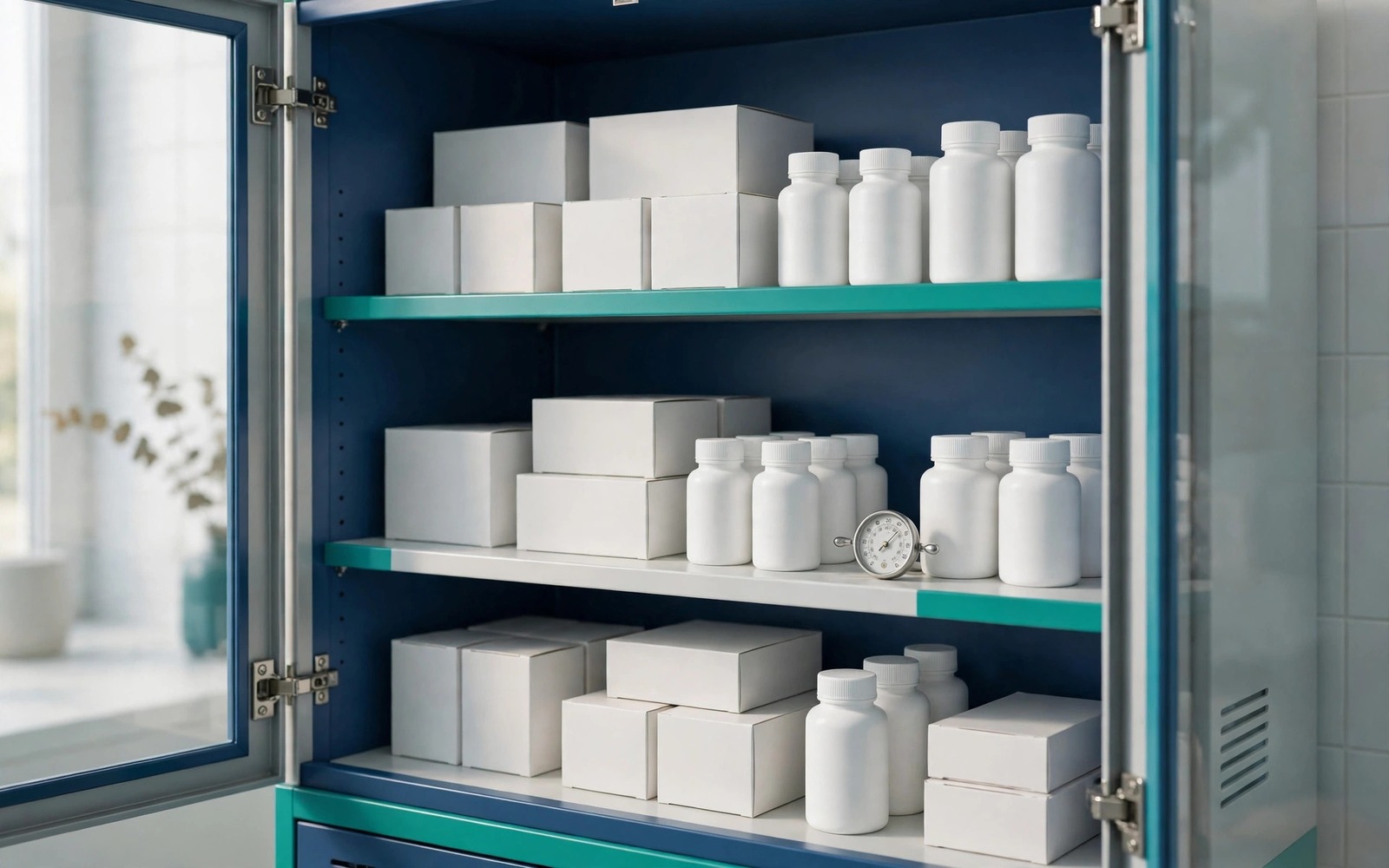
Storing Medicines Safely at Home in Pakistan's Climate
Heat and humidity can ruin genuine medicines. Here's how to store them so they stay effective.
4 min readUpdated
Table of contents8 sections
Quick answer
Store most medicines below 25–30 °C in a dry place away from sunlight, in their original packs. Keep insulin and some vaccines at 2–8 °C in the fridge body, never the freezer. Avoid bathrooms, kitchens and parked cars, and discard medicines that have melted, changed colour or become sticky.
Key takeaways
- Most medicines: below 25–30 °C, dry, out of sunlight.
- Never in the bathroom, kitchen above the stove, or a parked car.
- Insulin and some vaccines need 2–8 °C refrigeration.
General rules
| Storage label | What it means |
|---|---|
| Store below 30 °C | Room temperature in a cool room, away from windows |
| Store at 2–8 °C | In the fridge body — never the freezer or door |
| Protect from light | Keep in the original carton |
| Protect from moisture | Keep desiccant sachets; close lids tightly |
The best and worst places at home
| Place | Verdict | Why |
|---|---|---|
| Bedroom cupboard away from windows | Best | Stable, cool and dry |
| Kitchen near the stove | Avoid | Heat and steam |
| Bathroom cabinet | Avoid | Humidity degrades tablets |
| Car dashboard or glovebox | Never | Can exceed 60 °C in summer |
| Fridge door | Avoid for insulin | Temperature swings |
| Fridge body (2–8 °C) | For insulin, vaccines, some eye drops | Stable cold |
Signs a medicine has been damaged by heat or moisture
- Tablets cracked, crumbly, swollen or stuck together
- Capsules soft, sticky or misshapen
- Creams separated or watery
- Liquids cloudy, discoloured or with sediment
- Insulin cloudy (when it should be clear) or frozen
- An unusual smell
These changes can make a genuine medicine ineffective, and they can also hide a fake. When in doubt, ask a pharmacist and see is expired medicine safe.
Keeping children safe
- Store medicines high up and, ideally, locked.
- Keep them in original child-resistant packs.
- Never call medicine 'sweets'.
- Dispose of unused medicines promptly through a pharmacy.
During summer and load-shedding
- Use an insulated bag with cool packs (not ice directly) for insulin during power cuts.
- Discard medicines that have melted, changed colour or become sticky.
- Ask your pharmacist if heat-exposed medicine is still safe.
Common questions
What temperature should medicines be stored at?
Usually below 25–30°C, and 2–8°C for fridge items. Full table: medicine storage temperature.
Can heat make a medicine unsafe?
Heat can reduce potency before the printed expiry. Check dates with the expiry calculator and read is expired medicine safe?
Where should I keep insulin?
Unopened in the fridge at 2–8°C; in-use pens at room temperature for the time on the leaflet. See fake injections & vaccines for cold-chain red flags.
This guide is general information, not medical advice. DrugTrace.pk is independent and not affiliated with DRAP.
Topic hub
Labels, Storage & Safe Buying
Read labels, store medicines correctly and buy from the right place.
- How to read a medicine label ★
- Batch number & expiry
- DRAP registration number check
- Medicine storage temperature
- Storing medicines at home (this page)
- Is expired medicine safe?
- Expiry date calculator
- Pharmacy licence check
- Buy medicine online safely
- Pharmacist stock screening
- Medicine safety tips
Related topics
Keep reading
 Basics
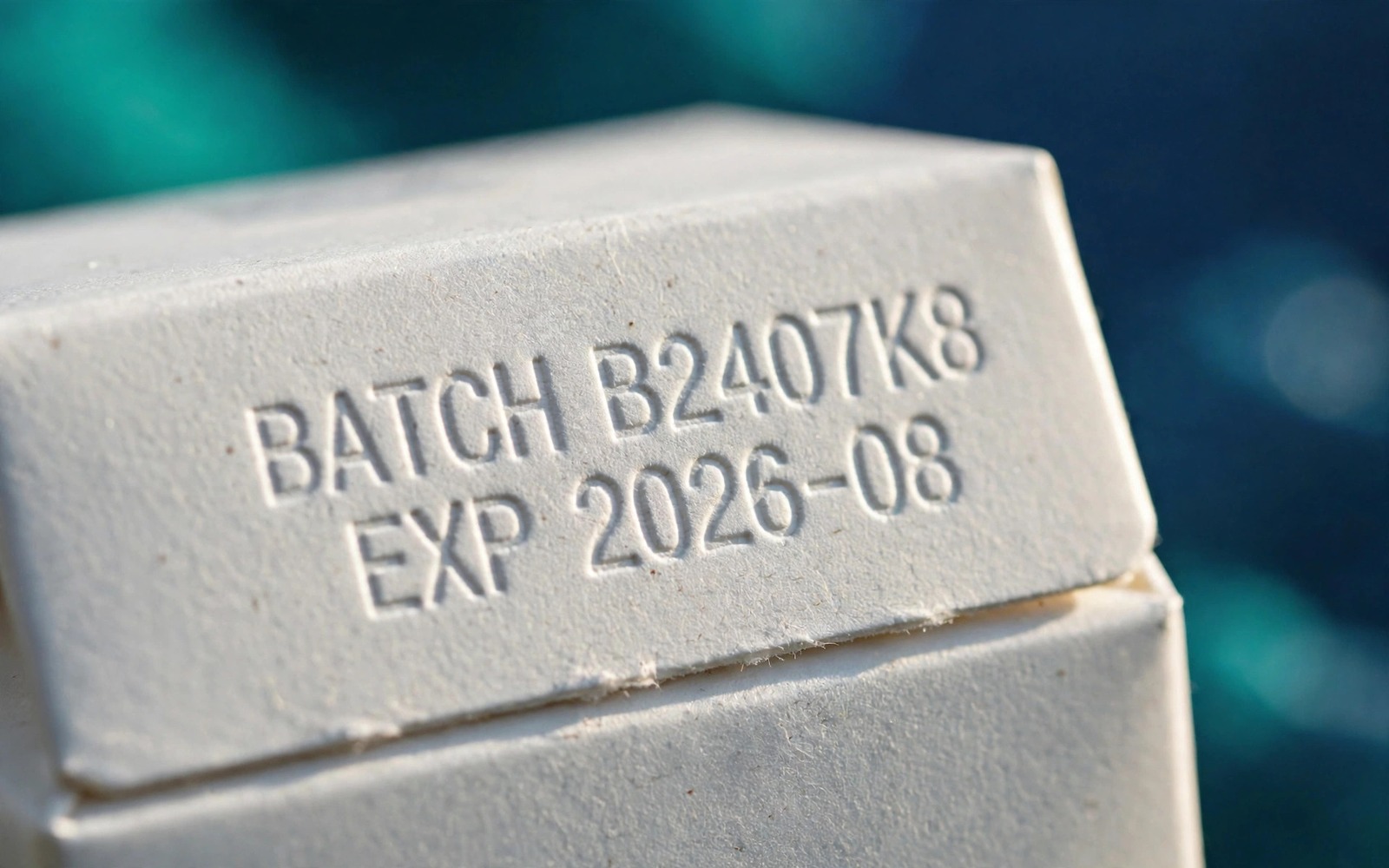
Reading Batch Numbers, Expiry and Registration Codes
What B.No, Mfg, Exp, Reg. No. and M.R.P. mean, where to find them, and how to read every date format.
5 min read
BasicsHow to Check a Medicine's DRAP Registration Number Online
Find the Reg. No. on your pack, search DRAP's official Registered Drugs Index, and understand what a match does and doesn't prove.
4 min read
 Basics
What Does 'Spurious Medicine' Mean? DRAP Terms Explained
Spurious, falsified, counterfeit, substandard, adulterated, misbranded: plain-English definitions of the words used in Pakistani drug alerts.
4 min read