
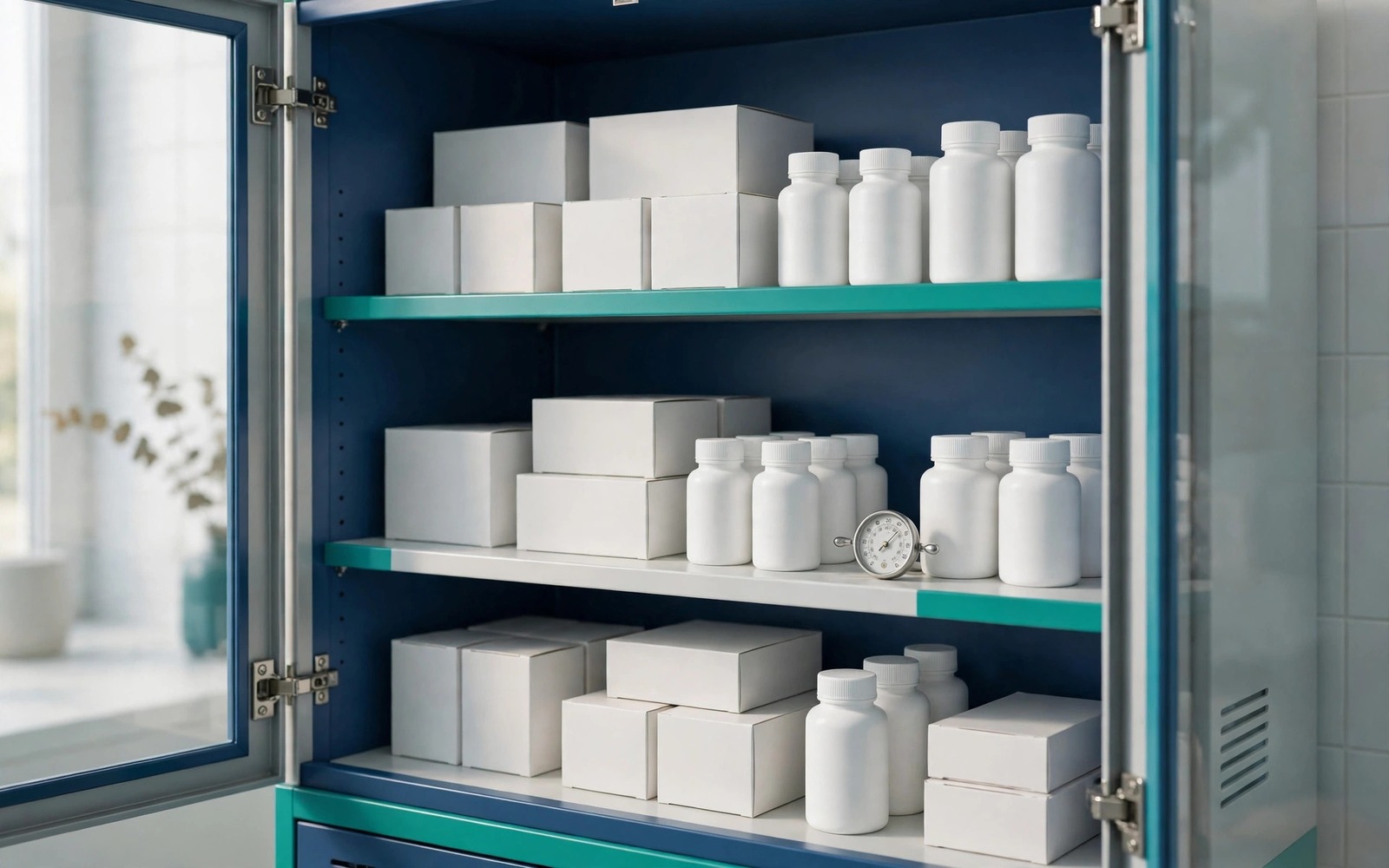
How to Spot Fake Injections, Vaccines and Insulin
Injectables are among the most frequently falsified medicines in Pakistan. Learn the vial, ampoule and cold-chain checks that matter.
6 min readUpdated
Table of contents9 sections
Quick answer
Before any injection, check the flip-off cap and seal are intact, the label is printed and not re-applied, batch and expiry match the carton, and the liquid is clear without particles. Cold-chain products like insulin and vaccines must be kept at 2–8 °C. Buy specialist injectables only from licensed pharmacies or hospitals.
Key takeaways
- Check the seal, cap, label print and liquid before every injection.
- Cold-chain products (insulin, vaccines, biologics) must be kept at 2–8 °C. Warm stock is a red flag.
- Buy specialist injectables only from licensed pharmacies or hospitals.
Why injectables are targeted
Injectable medicines are expensive, hard for patients to inspect and often bought in emergencies. Several 2026 DRAP alerts involved injections and vaccines. See the 2026 alerts roundup.
Vial and ampoule checks
- Flip-off cap and seal intact; no puncture marks in the rubber stopper
- Label printed, not handwritten, and not peeling or re-applied
- Batch and expiry on vial match the carton
- Liquid clear (unless it should be a suspension) with no particles
- Powder (for reconstitution) is a dry, even cake, not clumped or discoloured
- Patient leaflet present and well printed
Insulin: specific checks
- Pen or vial cold when bought (stored 2–8 °C)
- Clear insulins are clear; cloudy (NPH) insulins resuspend evenly
- No crystals, clumps or frosting
- Pen label not peeling; cartridge window undamaged
- Batch matches between pen, carton and leaflet
Unexplained high blood sugar despite normal doses can be a sign of degraded or fake insulin. Check with your doctor.
2026 injectable alerts
| Product | Batch | Finding |
|---|---|---|
| Influvac Tetra vaccine | P13 | Spurious |
| Vaxigrip Tetra vaccine | Y4B34 | Falsified |
| Rhophylac 300 µg | P100707423 | Spurious |
| Venofer 5 mL | 4721026AA | Spurious & substandard |
| Enhertu 100 mg | DK1262 | Falsified |
See the full list on our alerts page and the fake flu vaccine guide.
Questions to ask at a clinic
- Can I see the vial or syringe and its box before you inject?
- Where was this stored?
- Can I note the batch number?
- Which supplier do you buy from?
Cold chain: the hidden check
Insulin, vaccines and many biologics lose potency if they get warm, even when genuine. Ask whether the pharmacy kept the product refrigerated, and carry it home in an insulated bag. See storing medicines safely.
Common questions
How can I tell if an injection is fake?
Check the seal, label and liquid, and the batch in DRAP alerts. See fake flu vaccines 2026.
Is fake insulin a risk in Pakistan?
Any high-value injectable can be faked or poorly stored. Read medicine storage temperature for cold-chain checks.
Where should I buy injections?
Only from a licensed pharmacy with a fridge. See pharmacy licence check.
This guide is general information, not medical advice. DrugTrace.pk is independent and not affiliated with DRAP.
Topic hub
Counterfeit & Substandard Medicines
What fake, spurious and substandard medicines are and how they are caught.
- Counterfeit drugs in Pakistan ★
- Spurious medicine meaning
- Substandard vs falsified
- Drug testing laboratories
- Smuggled medicines
- Fake injections & vaccines (this page)
- Original supplements check
- Fake medicine checklist tool
- Tablet imprint finder
Related topics
Keep reading
 Spotting fakes
How to Check if a Medicine Is Original or Fake in Pakistan (2026)
The complete 2026 method: physical checks, the batch number, the 2D barcode, DRAP's registry and official alerts, in the order pharmacists use them.
9 min read
 Spotting fakes
How to Identify Fake Medicine: A Complete Visual Checklist
A step-by-step inspection routine for packaging, print quality, seals and the tablets themselves — the same checks pharmacists use.
8 min read
 Spotting fakes
Substandard vs Falsified Medicines: What's the Difference?
Understanding the WHO categories used in safety alerts, and what each means for patients.
5 min read